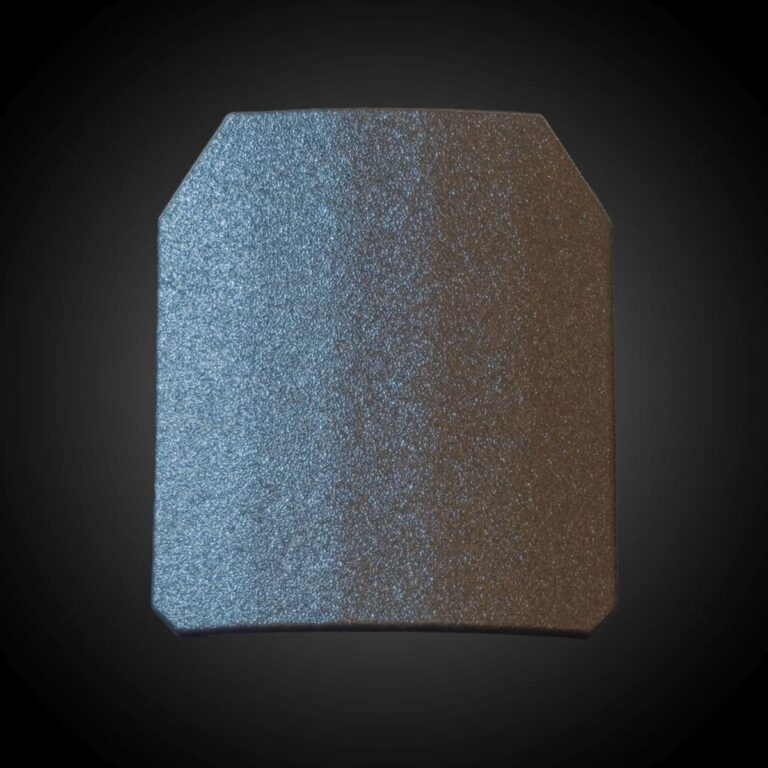

Body armor (plate carrier) is an item of equipment designed to protect against injuries caused by firearms or bladed weapons or fragments of explosive devices. It was named for its resemblance to a regular vest (no sleeves).
However, no armor has yet been invented that would reliably protect against all types of bullets. Due to the different physical properties of armor, bulletproof vests can’t withstand all types of bullets.
Body armor is divided into three types:
- TYPE A – soft (flexible) body armor with a protective structure based on special fabrics. These are fabric bulletproof vests that weigh 3-4 kilograms. However, the protective limit of fabric body armor is class 1-3, which protects against cold steel and certain types of bullets. Fabric bulletproof vests are quite expensive to produce. They are usually used by law enforcement and security personnel.
- TYPE B – semi-rigid bulletproof vests, the best class of protection, with a protective structure based on special fabrics and additional rigid protective elements. They have the advantage of covering a large area of protection but are too bulky.
- TYPE C – rigid body armor with a protective structure based on rigid protective elements (plate carrier with plates). Such vests are most often used by the military.
Body armor, depending on the type of damage, is divided into the following classes of protection:
- 1 – PM 9mm pistol;
- 1-A – APS 9-mm pistol;
- 2 – TT pistol 7.62 mm;
- 2-A – 12-gauge smoothbore hunting weapons;
- 3 – AK-74 assault rifle, 5.45-mm bullet; AKM assault rifle, 7.62-mm bullet;
- 4 – SVD 7.62mm rifle, chambered for 57-N-323c rifle cartridge;
- 5 – AKM assault rifle with 7.62-mm API (armour-piercing and incendiary) bullet;
- 6 – B-32 7.62mm rifle with a heat-strengthened steel core.
That is, the higher the class, the better the protection of the vest. All armor strength tests are carried out at a distance of 5-10 meters. However, during combat operations, the distance is rarely that short.
Different types of plates are inserted into the plate carrier: steel, ceramic, and polyethylene. The latter is not recommended by the military because they do not have a high class of protection and are more suitable for security structures than for the military.
Steel and titanium are used to make steel plates. Steel and titanium plates are used in bulletproof vests of 4-5 protection classes. They are highly resistant and can withstand multiple hits. The production of bulletproof vests with steel elements is relatively cheap, but they increase the weight of the vest to 8-10 kg, so the time of continuous wearing is reduced. Manufacturers that have proven themselves in the market for producing proven steel plates are Ukrainian Armour and Ballistics.
However, even if the vest is not pierced, the bullet still strikes the human body with great force.
In addition to steel armor, ceramic armor is a good defense, as it is very strong and lighter than metal armor. But it has one major drawback: short service life. After two or three hits, the ceramic shatters and provides little or no protection. Ceramic armor elements are very expensive to produce. However, they make it much easier to move around and be more mobile, which is why these vests are favored by reconnaissance and Special Forces units.
The manufacturers of ceramic plates we recommend are Ukrtak, U-win, and Ballistics.
Summing up, we conclude that the best protection for a soldier is type B armor, i.e. a plate carrier with armor plates inserted into it, either steel or ceramic. The advantages of steel: they have a high class of protection, and cover a large area, but are very heavy, which minimizes continuous wear. Advantages of ceramic: much lighter, reaching protection class 6, but have low durability, can split, or get microcracks when dropped.
The choice depends on the type of military service and the range of tasks assigned to the soldier.