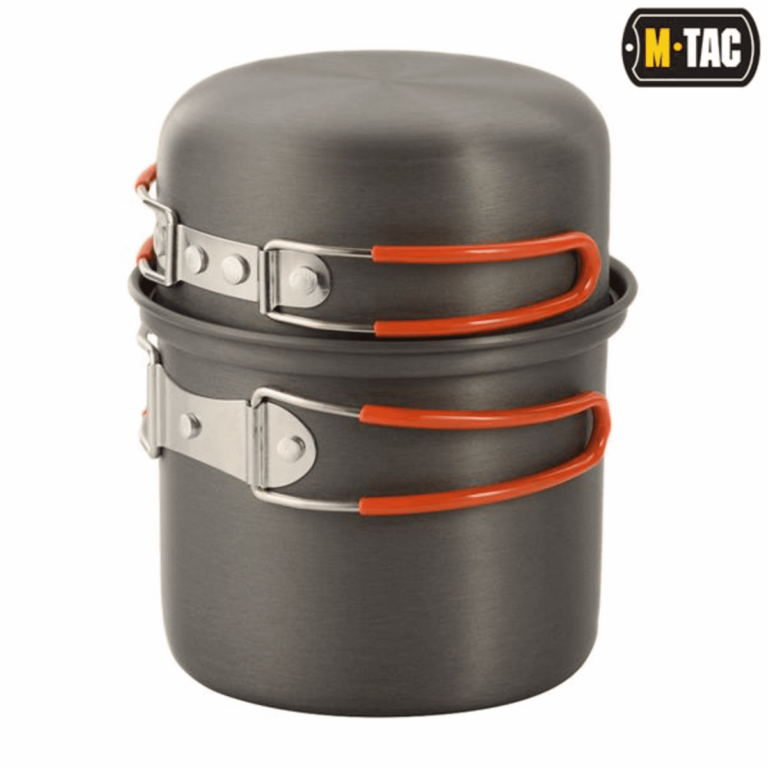
An individual set of tableware should include at least:
- half-liter container that can be used as a pot and a bowl
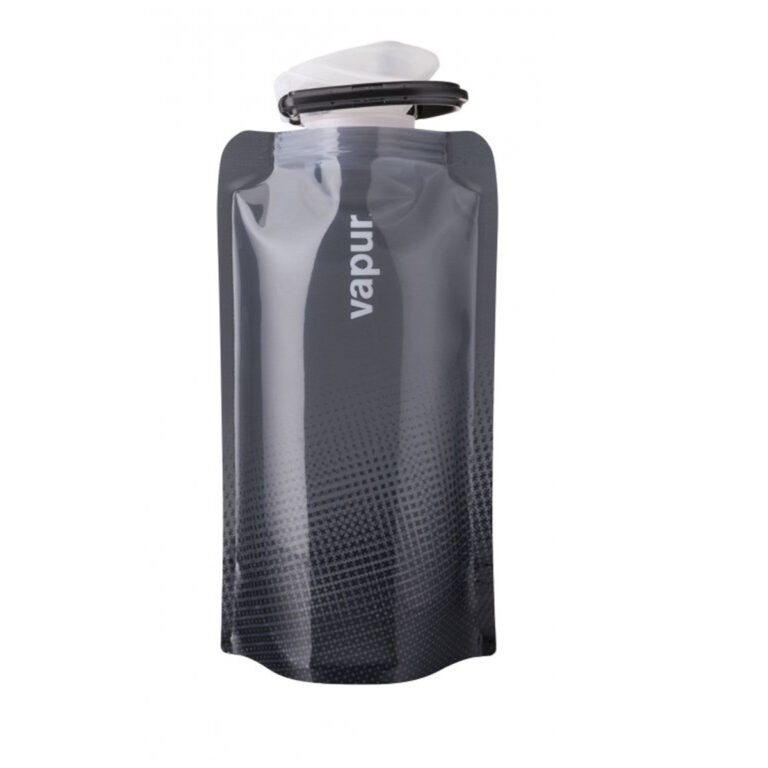
- a container with a volume of 330-500 ml, used as a mug
- a spoon
A shallow container that can be used as a frying pan or an additional plate is a nice, but not essential addition to the set. It is also important that the containers have handles, ideally insulated to prevent hand burns. Note that the vast majority of the frontline meals are liquid or semi-liquid, so a table knife and a fork will only take up space and add weight to the gear.
Reusable dinnerware sets are usually made from four types of materials:
- Cast iron, which is convenient for cooking, but too heavy and demanding. Not suitable for the military.
- Titanium, which is a light and strong material, is rather expensive. Also, titanium has a low heat capacity, so it does not distribute heat well inside the dishes. Because of this, it is not convenient to cook in this type of dishes.
- Aluminum, which is a light material with an average heat capacity. Aluminum dishes are a fairly good and inexpensive option for the military. Its only drawback is that pure aluminum can oxidize at high temperatures, which negatively affects the taste of food. That is why most aluminum cookware on the market is sold with an anodic coating. This coating protects the aluminum from oxidation and mechanical damage but wears off with frequent use.
- Stainless steel, which is lighter than cast iron, has higher thermal conductivity than titanium, and is a more reliable material than aluminum. Taking into account the frequency and conditions of use of dishes by the military, stainless steel dishes are the best option.
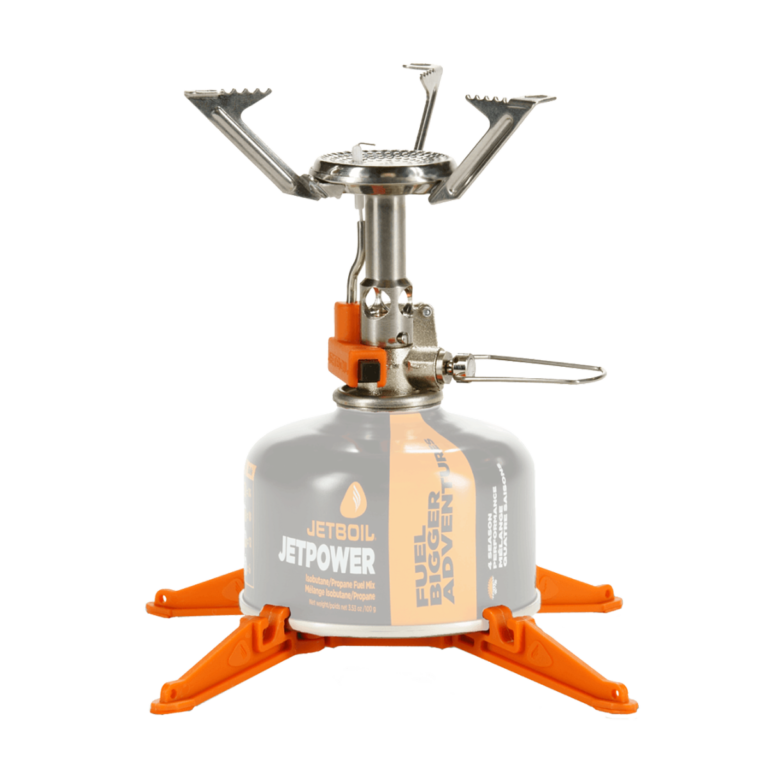
Note that it is common for the military to cook food and drinks using burners. Therefore, it is better to choose dishes that are suitable for use on the burner in terms of shape and dimensions.
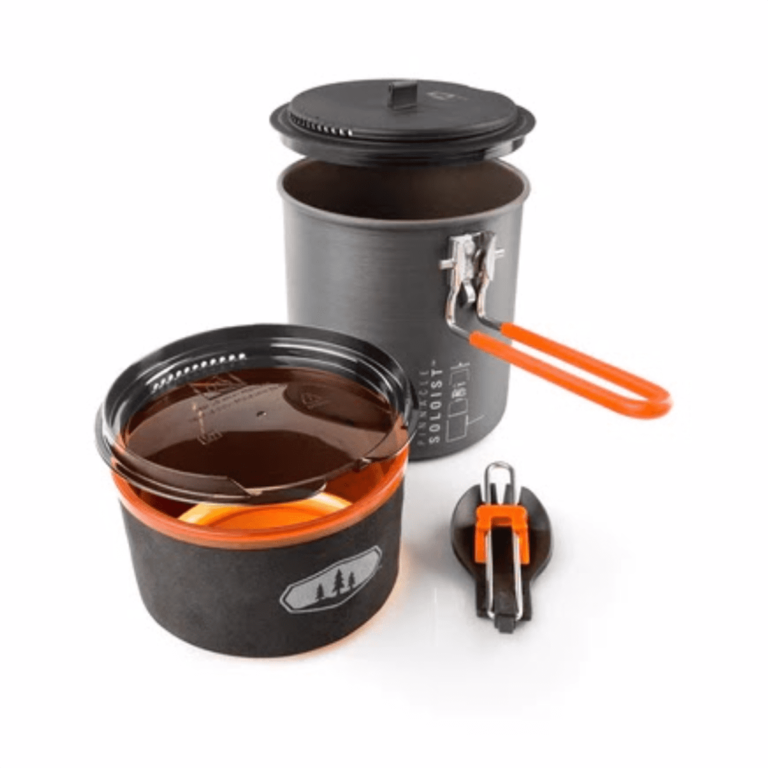
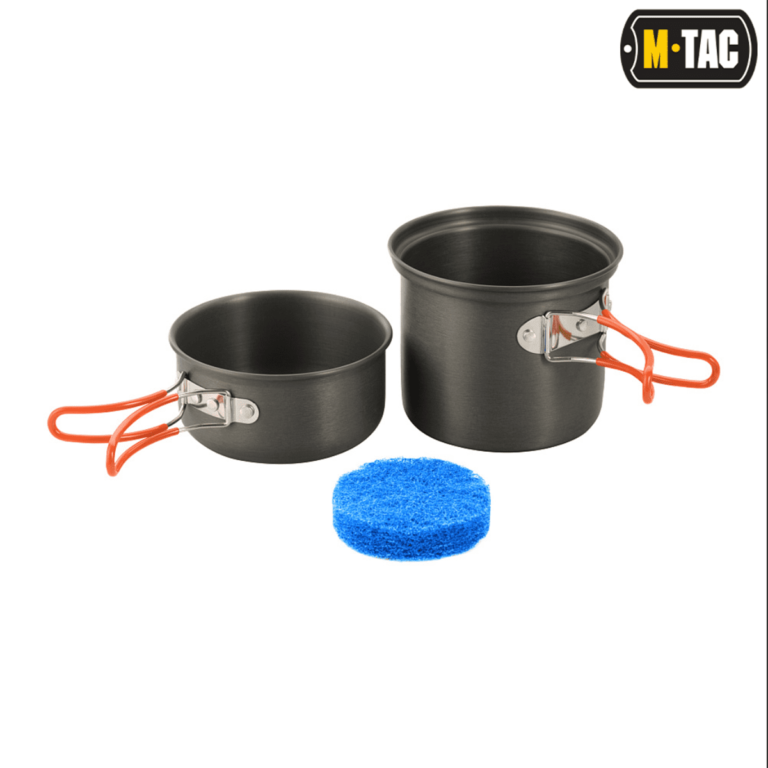
We can recommend dishes from the Ukrainian manufacturer M-TAC and the American Company GSI.