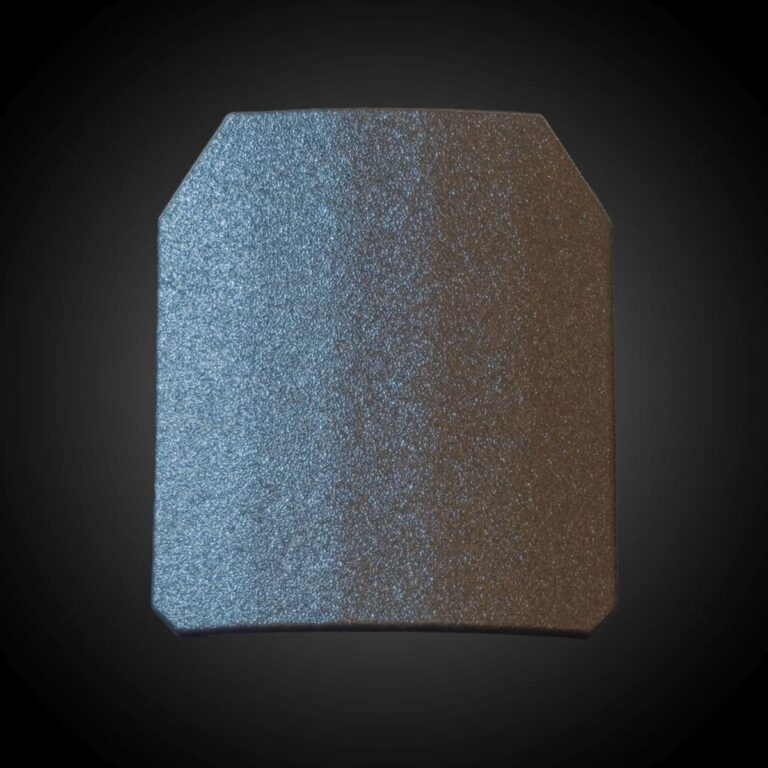

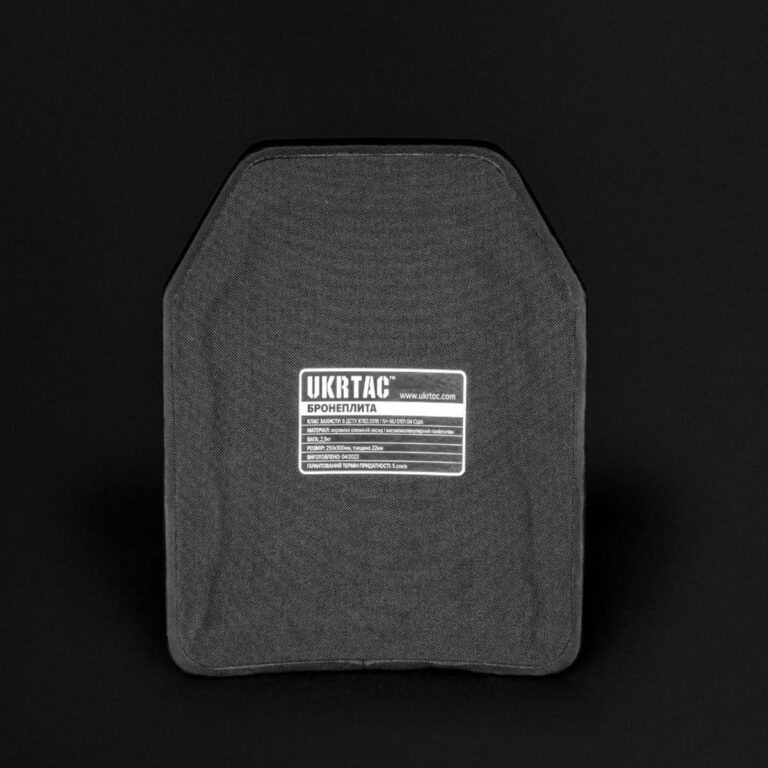
Equipping plate carriers with ceramic plates has become a reliable alternative to steel plates. One of the most important advantages of a ceramic plate is its weight (2.8-3 kg).
Other advantages include a high class of protection (the maximum level of protection is 6 DSTU); no chance of ricochet, unlike steel; no chance of contusion of internal organs (ceramics absorbs all the kinetic energy of a bullet, meaning that when a bullet hits, a segment of the ceramic is destroyed, absorbing all its energy).
However, the highly reliable ceramic inside the vest is itself a more fragile material than steel. The disadvantage of a ceramic plate is that it can develop microcracks after a fall, and after several hits, such a plate becomes unusable because it essentially crumbles. In other words, the plate has a low durability.
Ceramic plates are much more expensive to manufacture than steel plates. When choosing a material for a plate, the main thing to consider is the soldier’s location and the specifics of his work.
Recommended models: 6 DSTU UKRTAC, NIJ IV ballistic plates (6th class of DSTU).