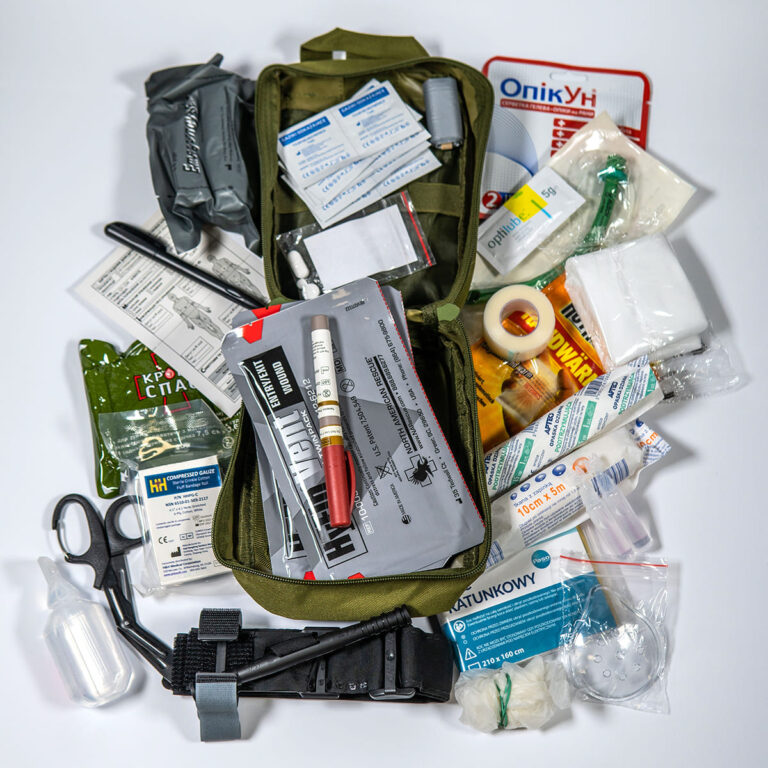
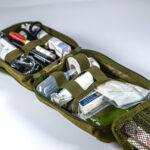
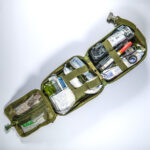
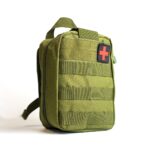
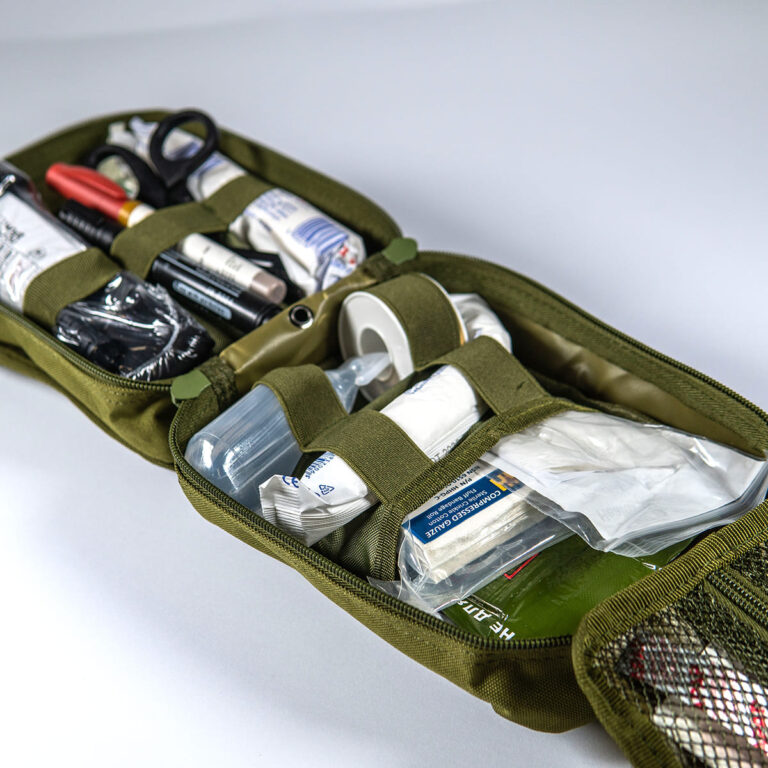
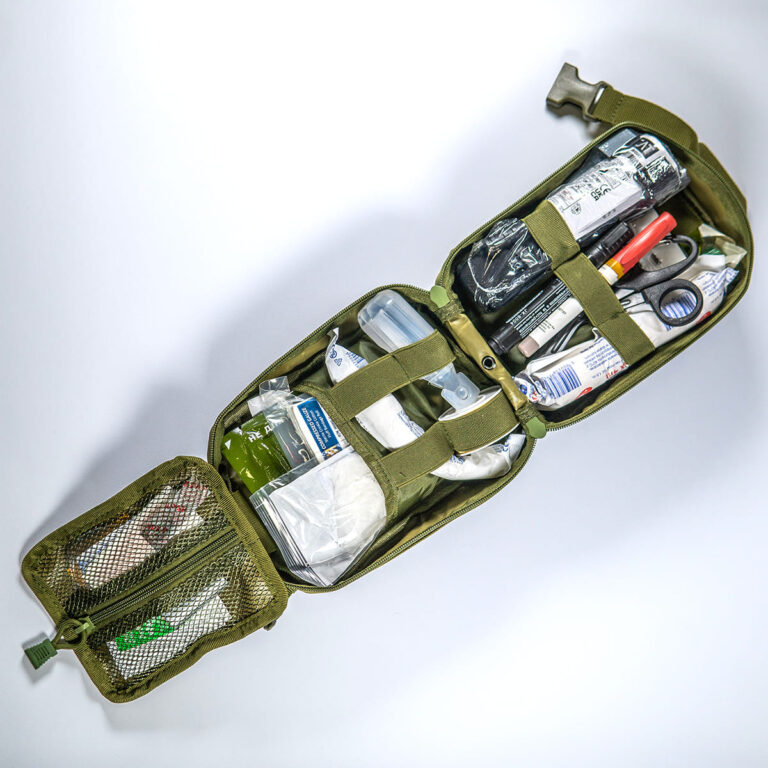
This is a specialized first-aid kit for providing prehospital assistance to military personnel and other people in conditions of hostilities or extreme situations when medical care is unavailable
Short description
To provide prompt medical care to the soldiers and other people in the conditions of hostilities, to save their lives and health
A casualty card (survey of the casualty) is a card made on the basis of TCCC standards and is a mandatory component of tactical first aid kits. It is made of waterproof wear-resistant material.
The tactical first-aid kit must be professionally equipped in accordance with the MARCH algorithm in the TCCC (Tactical Combat Casualty Care) concept, which is based on many years of experience in providing assistance to the wounded in combat conditions.
When assembling a first aid kit or in the process of purchasing it, pay attention to our recommendations.
Contents of a military tactical first aid kit
A military tactical first aid kit should contain:
Disposable nitrile (to be wear-resistant and not to be torn) gloves. They can be of any color, but not red or black, so that traces of blood can be seen when examining the wounded.
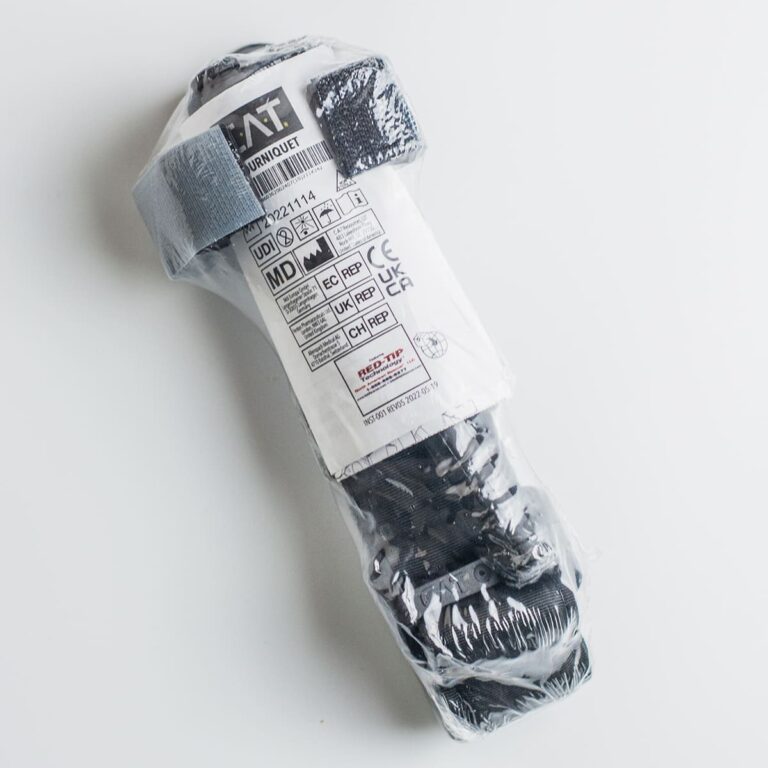
Tourniquet to stop blood loss, C.A.T. – Combat Application Tourniquet (it is desirable to have three tourniquets – one in the first-aid kit, the other one – outside, on the first-aid kit itself or on the ammunition, in a place designated for all fighters of the unit, and the third one for training (to develop skills)).
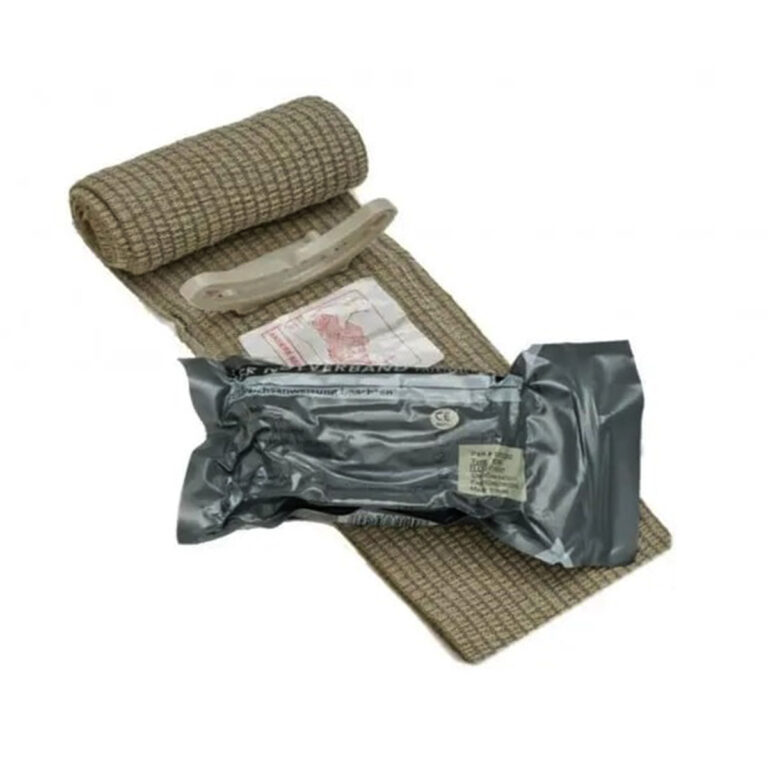
Israeli bandage – modern bandaging – The First Care Bandage made in Israel.
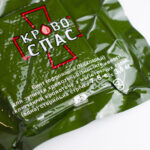
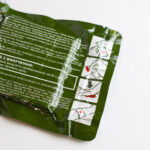
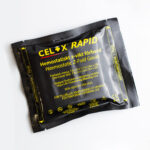
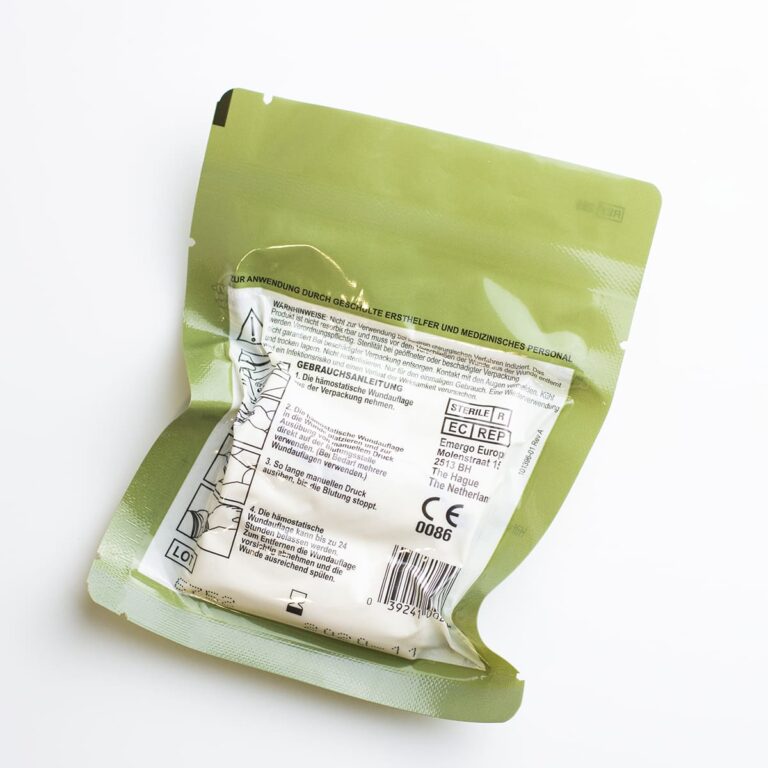
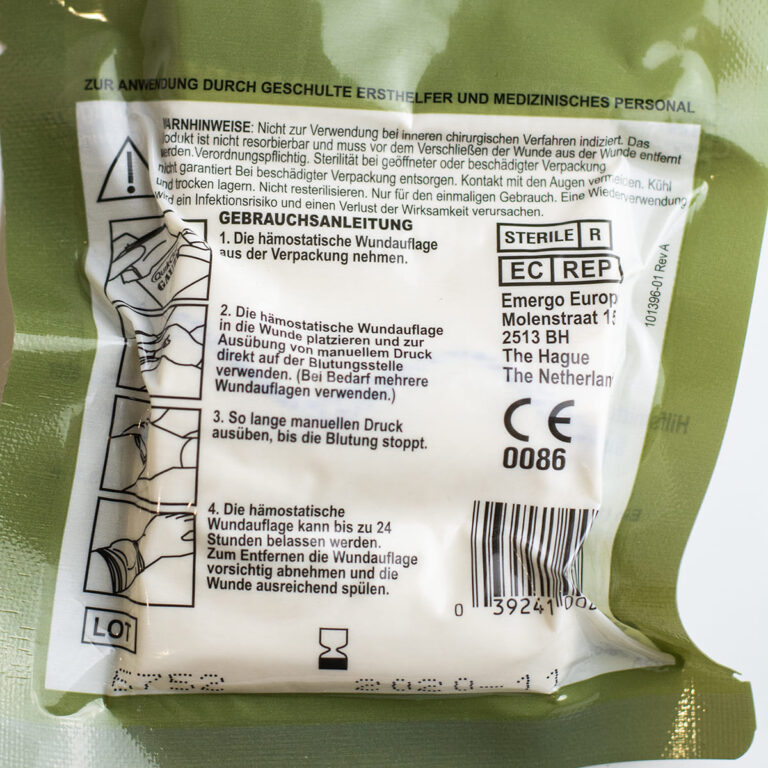
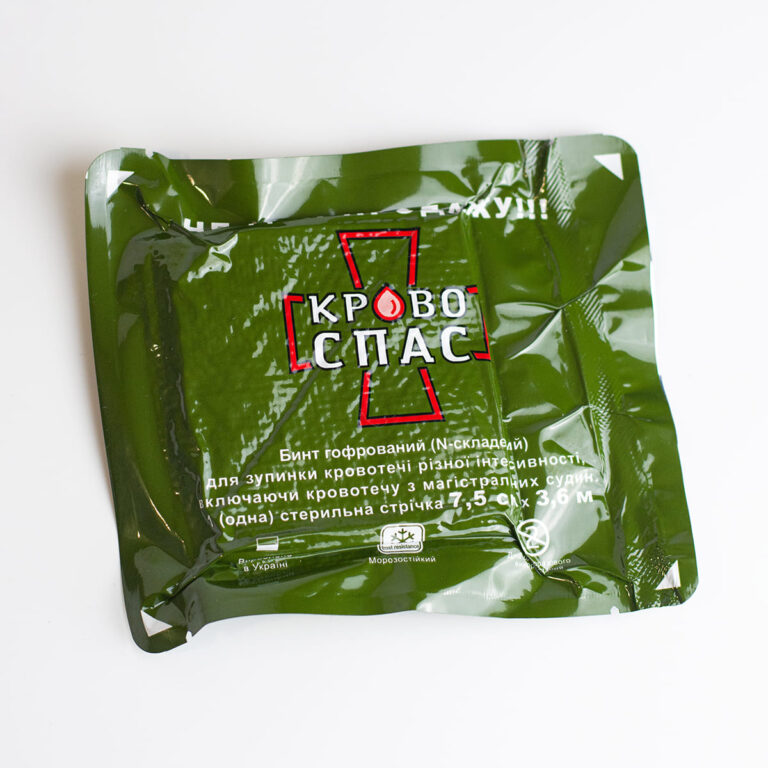
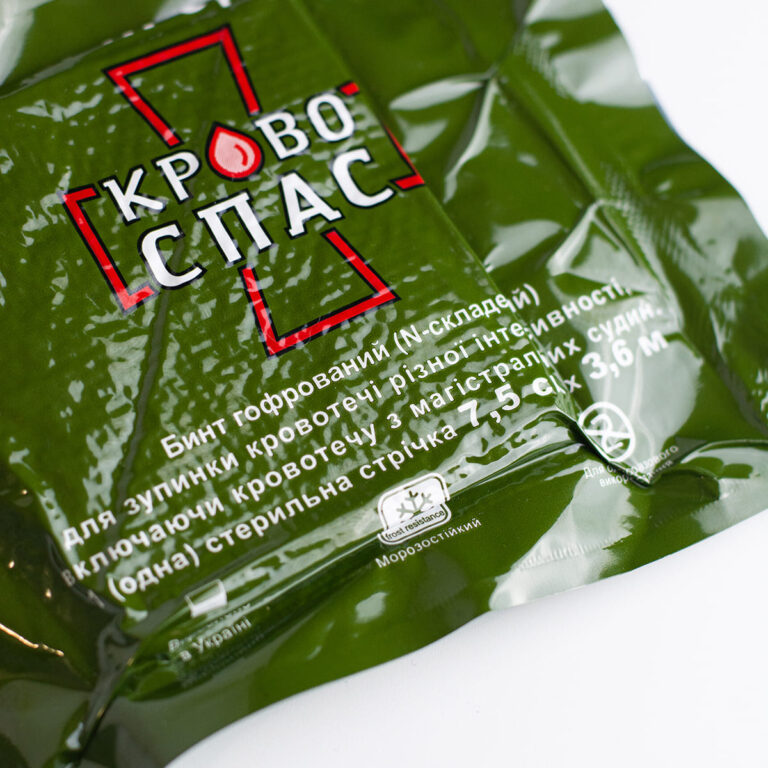
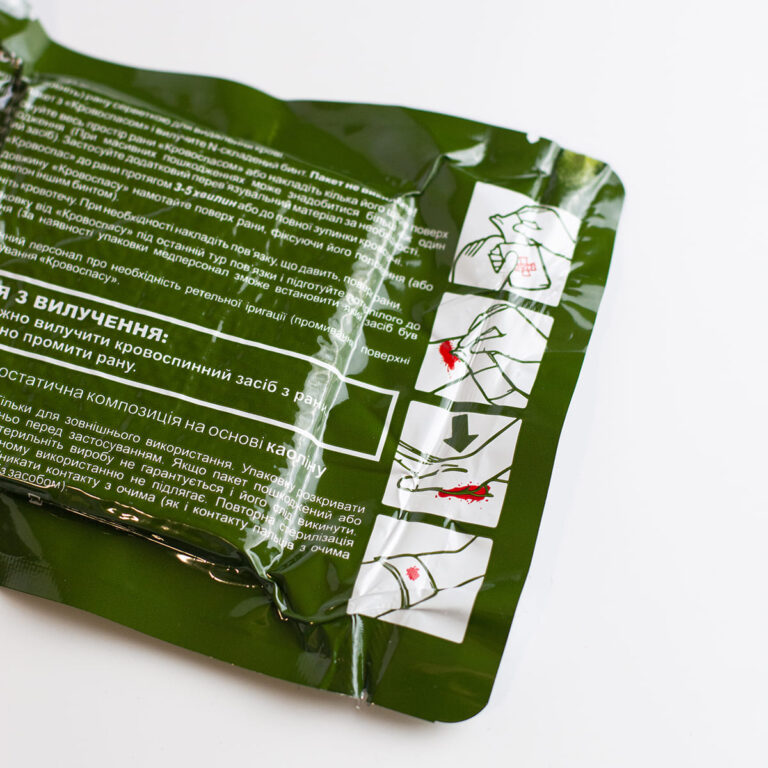
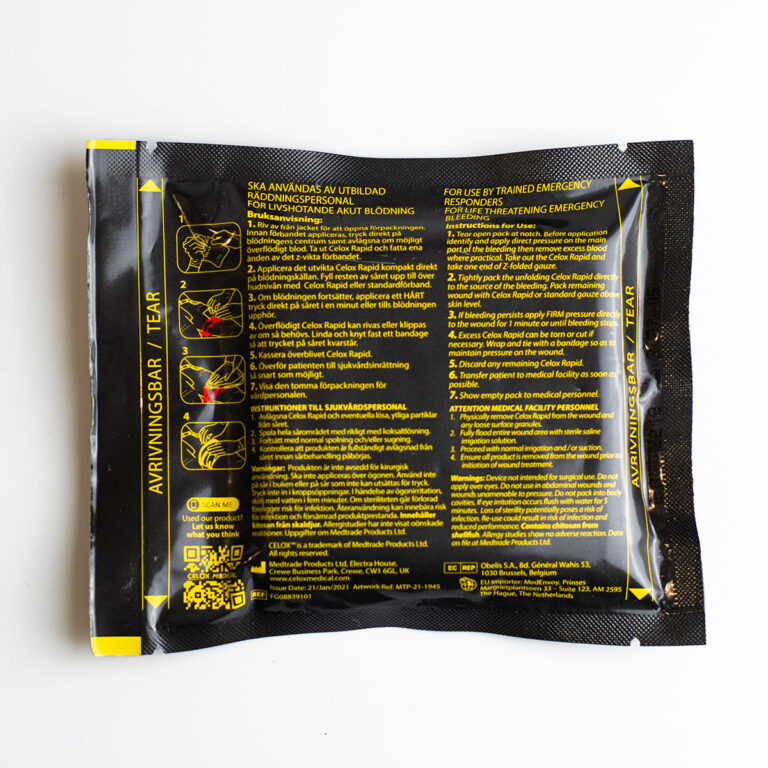
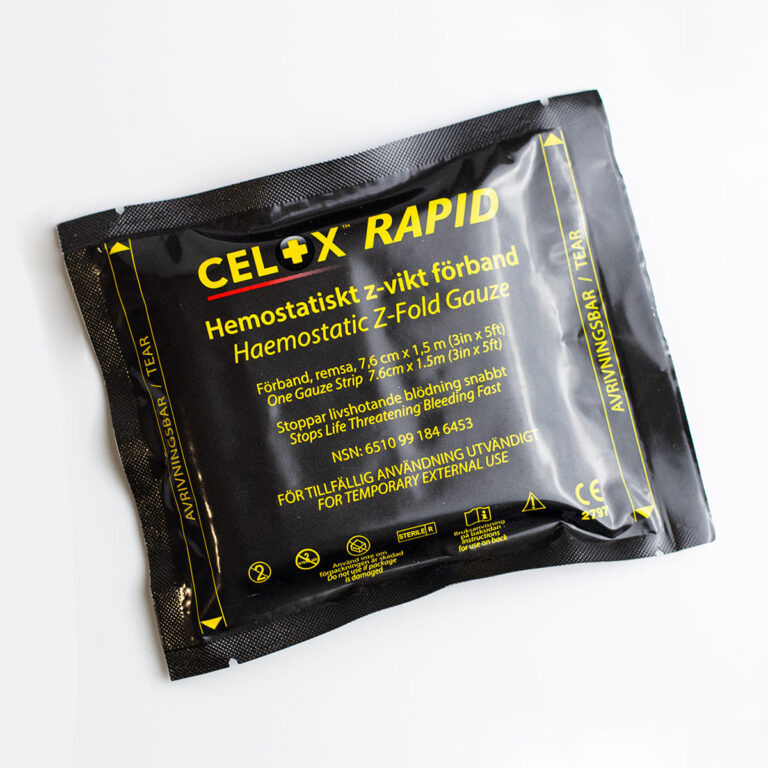
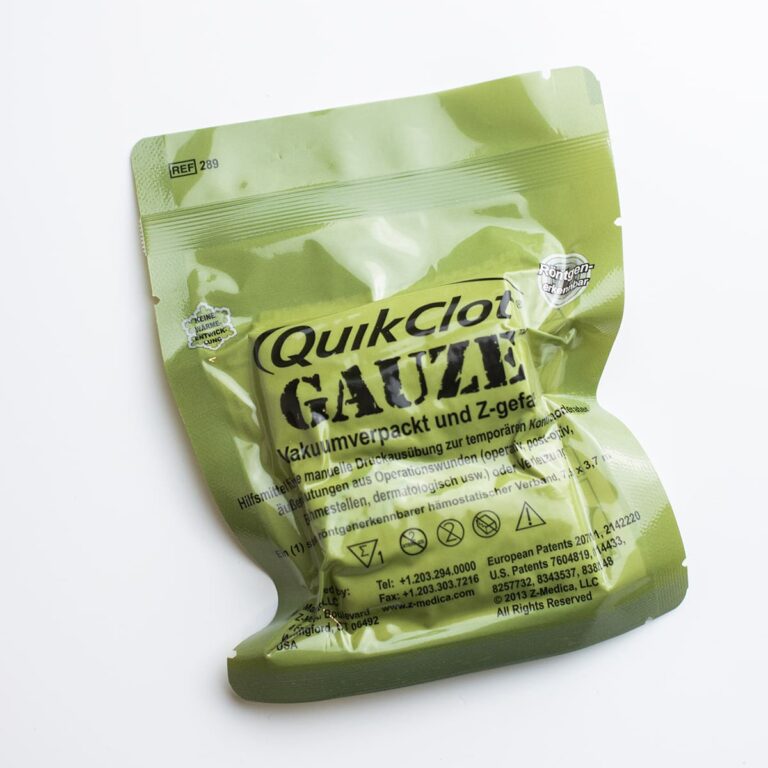
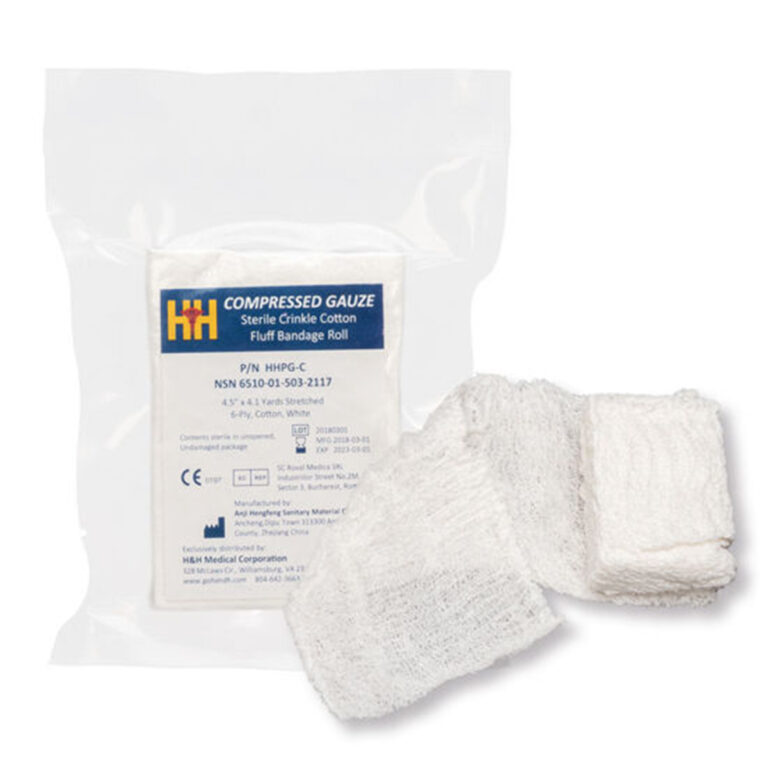
Hemostatic agents for tamponade in the form of a hemostatic bandage – Krovospas, Celox, Combat Gauze, QuikClot, H&H Compressed Gauze PriMed, etc.
Gauze bandage, plain or compressed, as an additional material for tamponade.
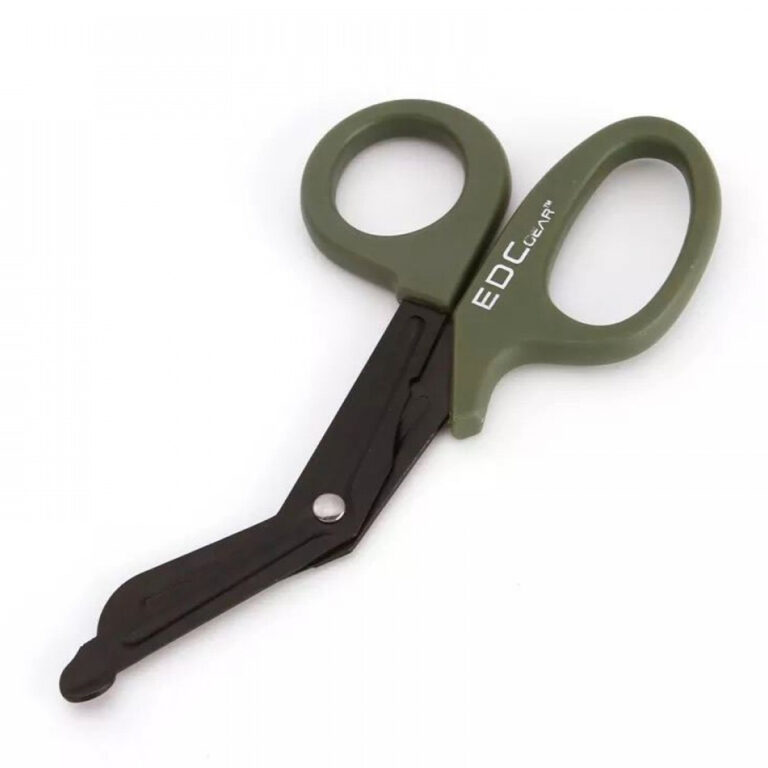
Special tactical scissors/shears used to cut clothing on a wounded person, bandages and other items.
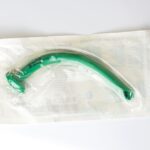
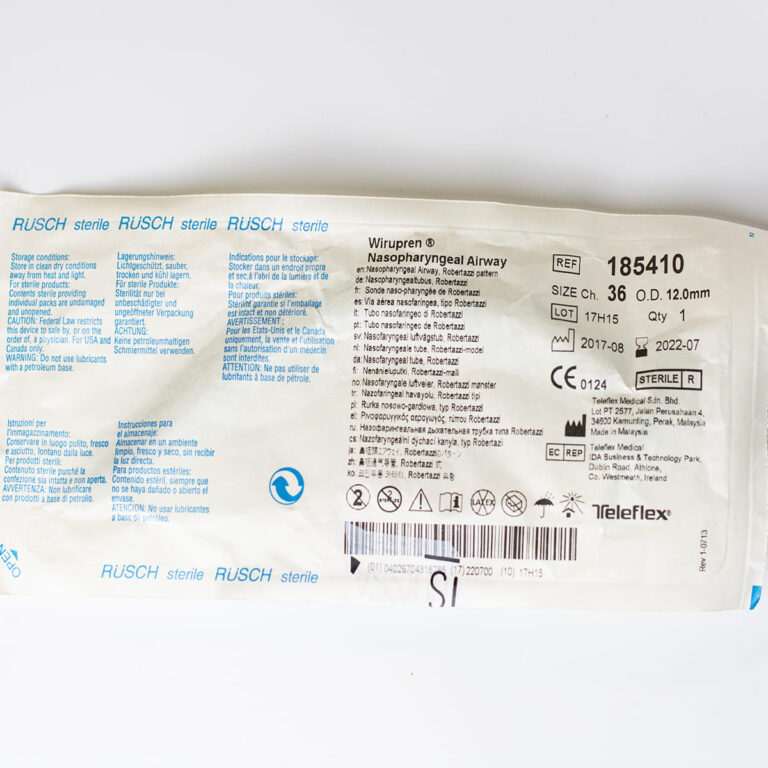
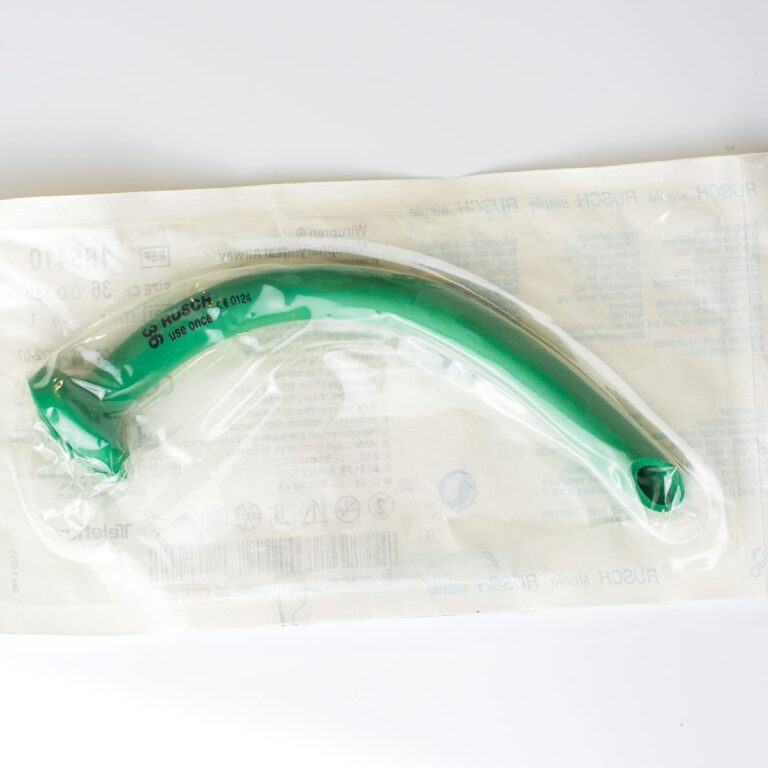
Appropriately sized nasopharyngeal tube (if it is too small, it will not help). When buying a tube for a soldier, you should ask him about the size.
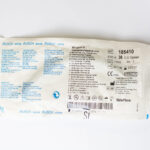
Occlusive dressing patch is a special seal used to stop the development of pneumothorax (that is, accumulation of air in the pleural cavity with a simultaneous increase in pressure in it, as a result of which the person suffocates and dies).
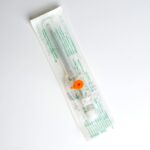
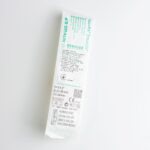
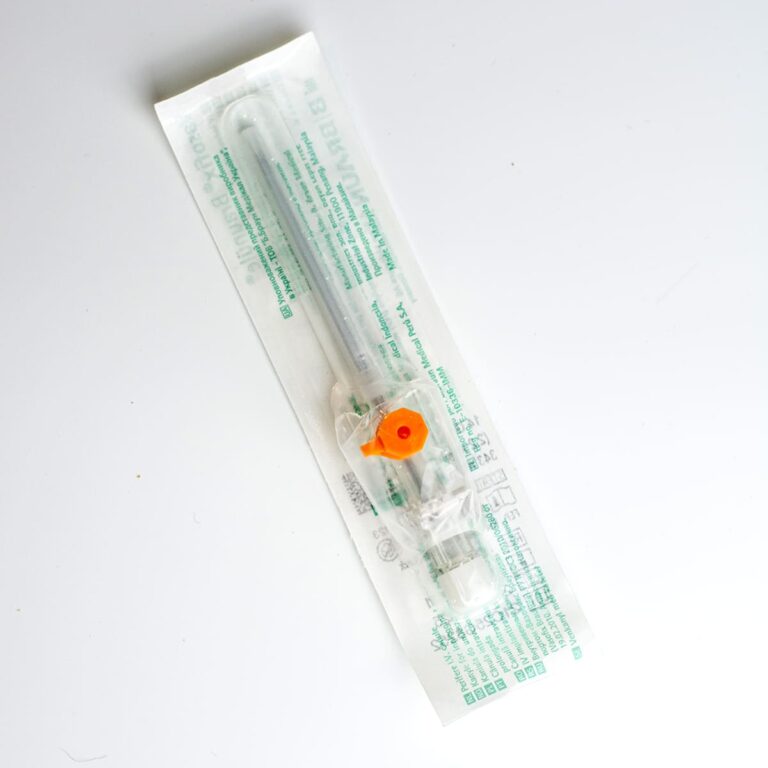
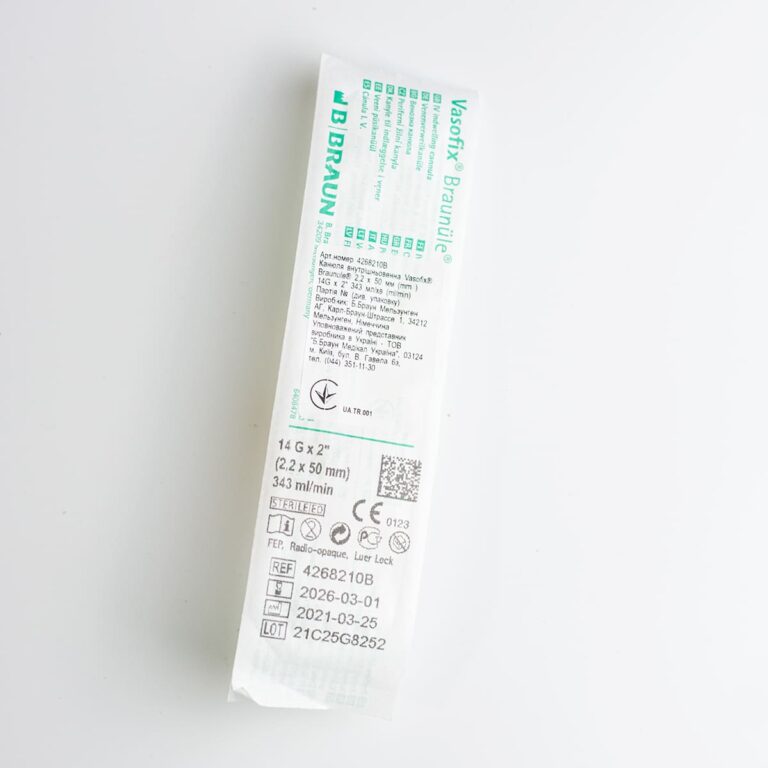
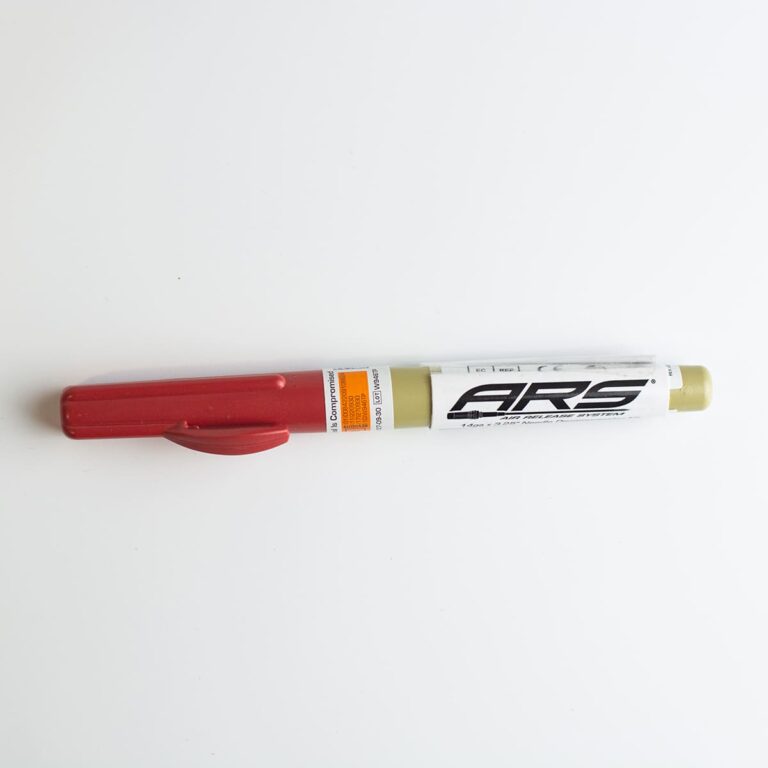
Decompression needle – a special needle for providing first aid. It relieves pressure in a tense pneumothorax before delivery to the hospital by piercing and releasing air from the pleural cavity. Decompression needle can be replaced with a 14G catheter.
A thermal blanket (isothermal blanket, or rescue blanket) is a blanket designed to reduce heat loss or prevent overheating of the human body in emergency conditions.
Protective eye shield – an eye patch for emergency treatment of traumatic eye injuries (for example, on the battlefield). The use of a shield can save vision, remove additional discomfort of the injured and save the paramedic’s time.
Triangular bandage – a triangular tactical bandage-kerchief from the world manufacturer of tactical medicine Rhino RESCUE, which is used to fix limbs in case of damage: fractures, bruises, dislocations, etc.
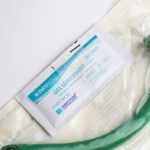
Hydrogel (anti-burn gel) that cools, disinfects and anesthetizes any burn wounds.
Chlorhexidine for washing and disinfecting wounds, and burns. It is important to use this drug, and not an alcohol-containing one, which thins the blood and can cause increased bleeding.
Pillpack – a set of pills: 2 pills of ofloxacin 0.5, 2 pills of paracetamol 0.5, 1 pill of meloxicam.
A casualty card (survey of the casualty) is a card made on the basis of TCCC standards and is a mandatory component of tactical first aid kits. It is made of waterproof wear-resistant material.
Additionally, depending on the size of the first-aid kit, you can also include:
A flexible splint (medical fixing splint) designed to provide first aid for injuries such as fractures and dislocations. It is flexible and suitable for the upper and lower limbs, providing a state of rest (immobility) for various bones and joints.
Surgical tape and bandages of various sizes for fixing bandaging and sealing small wounds.
Disposable wipes for effective cleaning of hands, face, body skin, and various surfaces from dirt.
Small bottle of saline solution for rinsing the eye and additional rinsing of wounds.
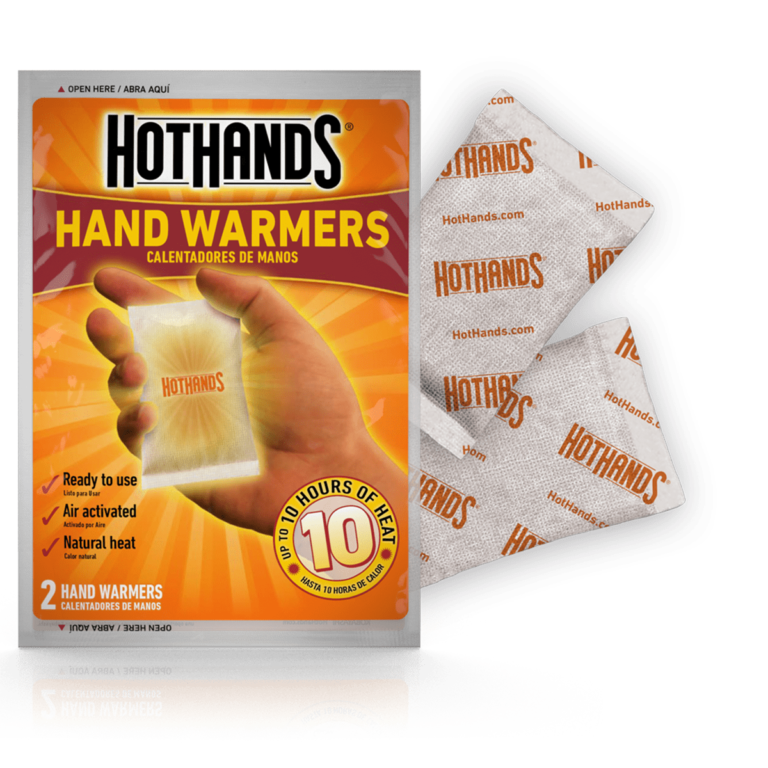
Chemical heating pad for individual quick and effective warming of body parts of the wounded.
Reinforced adhesive tape (medical adhesive tape). This is a tool that can be used to fix the splint, apply it over a bandage or bandaging, fix a casualty card, fix a damaged occlusal bandaging, etc. It sticks to any surface, and is resistant to high temperatures, moisture and chemicals.
When purchasing a first-aid kit, it is important to specify exactly which first-aid kit is needed and which color is preferred. When receiving the product, be sure to check the quality of the seams, the conformity of the model, and the completeness of the content. The first-aid kit can be supplemented with further medical supplies, if necessary.
Remember! A tactical first aid kit contributes to the survival of wounded soldiers in combat conditions, so it must meet all standards and requirements related to medical equipment.
Suggested kits: First aid kit Tactical Military Standard SICH, First aid kit INAP APU, First aid kit tactical individual IFAK.